There are a lot of fields to name so I will just proceed in telling you the process so far, and how it seems to span the course of the season.
So far we have transplanted varieties of broccoli, lettuce, beneficial mix (a mixture of, yes you guessed it, a beneficial herb blend to help with pest remediation), zucchini, onions, potatoes, parsley, cilantro, celery, chives, and probably a few more.
We have also seeded plenty of lettuce, chard, choy, cucumber, summer squash, winter squash, melons, pumpkins, etc.
Big days included; planting 33,000 onions in around 4 hours, planting potatoes all afternoon (cutting, planting, raking), seeding hundreds of trays, and weeding scotchbroom for two days in the rain and snow.
On that note! This post is about bugs and weeds. My favorite subjects.
What are symphylans you might ask?
Symphylans are little worm-like creatures that love to eat roots. They even have their own special category - symphyla - and are not considered insects. They are that fucking bug.
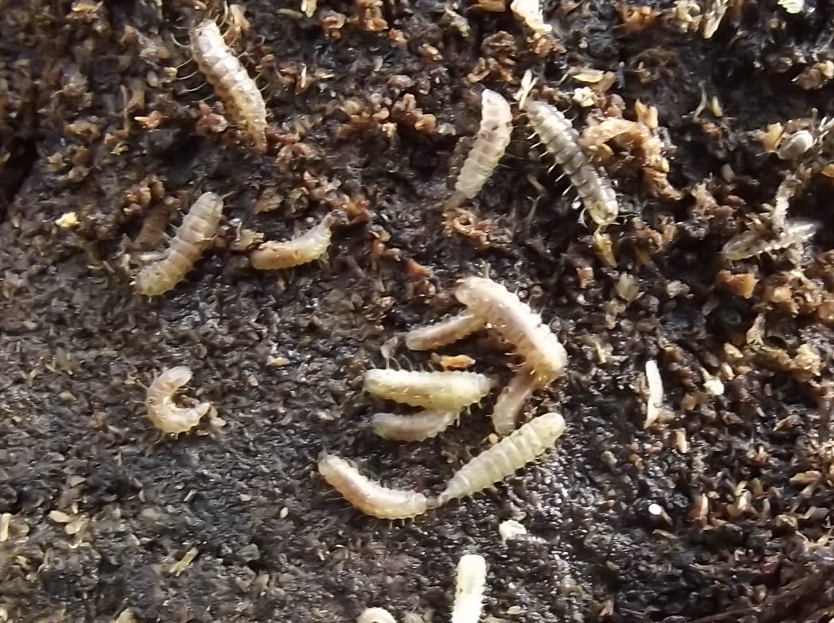
I mean, really bug, do you have to get all fat off the roots of the plants we are trying to feed hundreds of people with?
One of the fields at the Birchville site (about 7 miles away from the homesite), Juen's field, has a particularly bad case of the symphylans. There isn't a whole lot that our farmers know about symphyla - they tend to feed in soil that has a rich organic matter, and in well structured soil. So basically if you have bomb-ass soil, you got the worms yo. They noticed that with planting of potatoes in that field they suffered less - probably because potatoes grow from themselves (vegetative reproduction) and do not require the same kind of root structure most plants feed off of.
Above: Juen field, April 13, 2015. Possible symphyla destruction. Napa cabbage must persist.
I read a case by UC Davis's Ag program and they say there isn't a whole lot you can do about symphylans in your soil - you can pat down the planted surface hard so they have a difficult time burrowing and moving in more compact soil. A way to test how many symphylans you have in your soil you can place a thick slice of raw potato on moist surface soil, put a large-ish plastic container around that potato slice, and wait about 24-36 hours. It is bait and you will be able to see a snapshot of the amount of bug-dudes are in your soil.
Bermuda Grass
Okay, so in the same field as the symphylans, there is bermuda. This isn't a walk on the beach either...
"Cynodon dactylon, also known as dūrvā grass, Dhoob, Bermuda grass, dubo, dog's tooth grass, Bahama grass, devil's grass, couch grass, Indian doab, arugampul, grama, and scutch grass"
It basically has a crazy strong root system that forms a blanket beneath the surface. Wherever a node touches the ground a new root system is formed. It's like the tree of life but a fucking weed that hurts to pull out and disturbs your soil irrevocably. Ways to get rid of it? Constant weeding. Yep. Constant.
I don't even want to talk about the bermuda anymore.
Leaf Miner

This is gross, so watch yourself.
Leaf miner eats leaves. They are larvae that live and eat under the surface of your plant's leaf. This is especially bad on crops we eat the leaves of. Cool design though, bros.
Squish them when you find them. It's gross but do it. Floating rows, or remay, can help prevent this problems while the plants get big enough to harvest. I haven't heard crew members speak of good ways to help these dudes from digging around, but I believe that cutting badly affected leaves while also being diligent on squishing the larvae when found in a crop is a good way to manage it.
Any ideas?
Getto-Veg Out.

Symphylans look very familiar....sounds like fun!
ReplyDeleteGIMME MORE BLOGS
ReplyDelete