Thursday, 30 April 2015

Vegetable Nation

This week featured lots of hours of weeding (with hula hoes, hands, and eye hoes), learning how to flame direct seeded beds that have begun germinating but haven't reached the surface yet, and lots of sweaty hours in the caterpillars learning how to tie tomatoes.

Torturous Tomato Tying Tutorial:

First step: know what the end goal is. Don't just do things because you think they make sense. Get a visual on what you are trying to accomplish and make it happen. Listen!!!
Second Step: Pound in posts with a post pounder, facing the same direction, about 3-4 plants in between. Make sure there is a gate about 2' long, to get in between beds (Because they will get tallllll).
Third step: Walk out twine with about 13 arm lengths of extra at the end of the bed. Cut end and tie the beginning of the first post on the opposite end of the bed.
Fourth Step: At each post, pull twine towards you, hold in place, make a loop, bring loop through twice on the side closest to the last post, knot, pull around to other side of post, check for tautness. Do this on both sides of the stake at about 4" off the ground, so that each plant has a base level of twice holding it up.
Fifth step: Depending on how big your tomato plants are at this point, you will continue to tie up the tomato until it is essentially tied into a straight line. This helps keep the fruit off the ground, helps with harvest, and supports the plant so it can grow stronger.

We grow mostly indeterminate tomatoes here - indeterminates produce fruit throughout the season due to the fact that the terminal flowers are lateral and continue to let the plant grow tall. Determinates are varieties that have a terminal flower cluster at the terminal growing point, which causes it to stop growing and  end tomato production.

What this means to me? I'm going to tie tomatoes forever, so I might as well look at the work as ecstasy instead of drudgery.

Below I have posted a list of all the varieties of vegetables we grow here. This might be of interest to some people, and to those who are not interested...you don't have to read it! But for real, I think it is crazy how many varieties of vegetables we grow here, it's pretty great. We are always experimenting with new varieties and tweaking our approach to some. For instance, we are growing two different beds of the same succession of Nelson carrots. In one, we are not thinning them, which is something I've never seen before, and comparing it to the other bed that we are thinning. We were hoping they would be ready at different times, and they are, but surprisingly the ones that were not thinned are further along. Not what we expected!

The last two weeks have also brought us our first harvests of the year! We harvested red russian kale, the most perfect arugula you've ever seen or tasted, rainbow chard, and butter lettuce. We are only doing wholesale harvesting right now, as the CSA still hasn't started (but soon hopefully! maybe next week or the week after), and Farmer's market in Nevada City doesn't start till mid-June (which is ridiculously late).

Some harvest pictures:
Butter Lettuce


Heading out to snap dat red russian kale
Bathing our delicious arugula


Plant Varieties (this isn't even all of them...)
Arugula
Basil:
  • Large Leaf
  • Thai
Beans:
  • Jade
  • Calypso
  • Savannah
Beets:
  • Red Ace
  • Boldor
  • Chioggia guardsmark
Broccoli:
  • Blue Wind
  • Castle Dome
  • Bay Meadows
  • Imperial
  • Arcadia
Brussel Sprouts:
  • Nautic
Cabbage:
  • Farao Gonzalez
  • Napa - minuet
  • Alcosa
  • Super Red 80
  • napa - bilko
Carrots:
  • Nelson
  • Purple Haze
  • Bolero
Cauliflower:
  • Bishop
  • skywalker
  • denali
Celeriac:
  • Brilliant
Celery:
  • Tango
Chard:
  • Bright Lights
Chicories:
  • Fiero (radicchio)
  • Clio Green dandelion
  • Natacha
  • Eros
  • Virtus (sugarloaf)
Choy:
  • LeRin
  • White Flash
  • Koji
  • Yukina Savoy
Cilantro:
  • Santo
  • marino
Collards:
  • Flash
Corn:
  • Spring Treat
  • Sugar Pearl
  • Sugar Buns
  • Vision
Cucumbers:
  • Diva
  • Amiga
  • Adam
  • Mercury
  • Salt N Pepper
  • Poona Kheera
Dill:
  • Bouquet
Edamame:
  • Butter Beans
Eggplant:
  • Orient Charm
  • Orient Express
  • Nadia
  • Nubia

Fennel:
  • Orion
Garlic
Herb:
  • Oregano
  • rosemary
  • thyme
  • sage
Hot Pepper:
  • Mellow Star
  • Early Jalepeno
  • Candle Light
  • Garden Salsa
  • Habanero
  • Hot paper lantern
  • Hot Rod (Serrano)
  • Hungarian Hot
  • Beaver Dam (anaheim)
  • Carmen
  • Sweet Sunrise
  • Gypsy
  • Revolution
  • Xanthi

Kale:
  • Red Russian
  • Toscano
  • Winterbor
  • Ripbor
Leeks:
  • Lancelot
Lettuce:
  • Bambi baby
  • dragoon
  • carioca
  • nevada
  • magenta
  • spretnak baby
  • muir
  • Adriana Butter
  • Salvius
  • Rouxai
  • Panise
  • Skyphos
  • Oscarde
  • Adriana Butter
  • Australe red baby
  • Monte Carlo baby
  • Quan yin
  • crispino
Melons:
  • Athena (cantaloupe)
  • Arava (galia)
  • Brilliant (Canary)
  • Lambkin
  • Petit
  • Halona (cantaloupe)
  • hannah’s choice
  • little baby flower
  • pony yellow
  • san juan
  • snow mass
  • solitare
  • yellow doll
Onions:
  • Walla Walla
  • Copra
  • Shallots
  • Sierra Blanca
  • Cabernet
Peas:
  • Sugar Anne
Parsley:
  • Giant Italian
Parsnip:
  • Albion
Potatoes:
  • red gold
  • kenebec
  • colorado rose
  • desere
  • purple viking
  • yukon
Pumpkin:
  • Autumn Wings
  • Baby Pam
  • expert
  • traimble
  • rock star
  • galeux d’eysines
  • jarrahdale
  • long island cheese
  • rouge vif d’etampes
Radish:
  • Crunchy Royal
  • Easter Egg
  • Red Meat
  • Cherriette
  • Sora
  • Rover
Scallions:
  • Nabechan
  • White Spear
  • Deep Purple
Spinach:
  • Space
  • Corvair
  • Pigeon
  • Emu
  • Molokai’i
  • Olympia
Summer Squash:
  • Dunja
  • Golden Glory
  • Yellowfin (Experimental)
  • Raven
  • Green Tiger
  • Patenon
  • Y- Star
Strawberries:
  • Albion
  • Mara du Bois
Sweet Potatoes:
  • Beauregard
  • Japaenese
Tomatillo:
  • Verde Puebla
Tomatoes:
  • sungold
  • estiva
  • big beef
  • mountain magic
  • new girl
  • DRO141TX
  • Brandy Wine
  • Black Krim
  • Copia
  • Persimmon
  • Juliette (paste)
  • Striped German
Turnip:
  • Hakurei
  • Purple Top
  • Tokyo Market
Winter Squash:
  • Bagheera (Kabocha)
  • spaghetti
  • Buttercup (kabocha)
  • delicata
  • blue ballet
  • tuffy (acorn)
  • waltham
  • zeppelin
  • sunshine (kabocha)


Tuesday, 14 April 2015

Symphylans, bermuda, leaf miner oh my!

The function and schedule of this farm is hard to jump into mid-way through the growing season. When we arrived on March 30 for work, the existing crew (Aaron, Abby, Cory, Missy, Mike) had already gotten a jump start on a lot of the seeding, transplanting, and bed preparation. March was warm, followed by a very mixed-message April. So far we have experienced dry and relatively warm weather, followed by 31 degree nights, some rain (though not enough), and even snow. The most snow I've seen in a while.

There are a lot of fields to name so I will just proceed in telling you the process so far, and how it seems to span the course of the season.

So far we have transplanted varieties of broccoli, lettuce, beneficial mix (a mixture of, yes you guessed it, a beneficial herb blend to help with pest remediation), zucchini, onions, potatoes, parsley, cilantro, celery, chives, and probably a few more.

We have also seeded plenty of lettuce, chard, choy, cucumber, summer squash, winter squash, melons, pumpkins, etc.

Big days included; planting 33,000 onions in around 4 hours, planting potatoes all afternoon (cutting, planting, raking), seeding hundreds of trays, and weeding scotchbroom for two days in the rain and snow.

On that note! This post is about bugs and weeds. My favorite subjects.

What are symphylans you might ask?

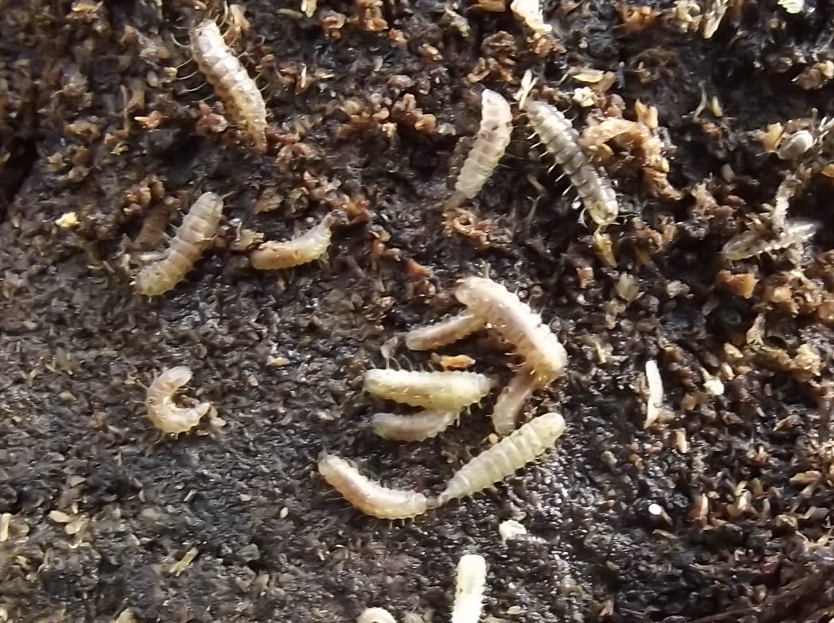
Symphylans are little worm-like creatures that love to eat roots. They even have their own special category - symphyla - and are not considered insects. They are that fucking bug. 
I mean, really bug, do you have to get all fat off the roots of the plants we are trying to feed hundreds of people with?

One of the fields at the Birchville site (about 7 miles away from the homesite), Juen's field, has a particularly bad case of the symphylans. There isn't a whole lot that our farmers know about symphyla - they tend to feed in soil that has a rich organic matter, and in well structured soil. So basically if you have bomb-ass soil, you got the worms yo. They noticed that with planting of potatoes in that field they suffered less - probably because potatoes grow from themselves (vegetative reproduction) and do not require the same kind of root structure most plants feed off of.

Displaying image.jpeg
Above: Juen field, April 13, 2015. Possible symphyla destruction. Napa cabbage must persist.

I read a case by UC Davis's Ag program and they say there isn't a whole lot you can do about symphylans in your soil - you can pat down the planted surface hard so they have a difficult time burrowing and moving in more compact soil. A way to test how many symphylans you have in your soil you can place a thick slice of raw potato on moist surface soil, put a large-ish plastic container around that potato slice, and wait about 24-36 hours. It is bait and you will be able to see a snapshot of the amount of bug-dudes are in your soil.

Bermuda Grass
Okay, so in the same field as the symphylans, there is bermuda. This isn't a walk on the beach either...
"Cynodon dactylon, also known as dūrvā grass, DhoobBermuda grassdubo, dog's tooth grass, Bahama grass, devil's grass, couch grass, Indian doabarugampulgrama, and scutch grass"
It basically has a crazy strong root system that forms a blanket beneath the surface. Wherever a node touches the ground a new root system is formed. It's like the tree of life but a fucking weed that hurts to pull out and disturbs your soil irrevocably. Ways to get rid of it? Constant weeding. Yep. Constant.

I don't even want to talk about the bermuda anymore.

Leaf Miner

This is gross, so watch yourself.

Leaf miner eats leaves. They are larvae that live and eat under the surface of your plant's leaf. This is especially bad on crops we eat the leaves of. Cool design though, bros.

Squish them when you find them. It's gross but do it. Floating rows, or remay, can help prevent this problems while the plants get big enough to harvest. I haven't heard crew members speak of good ways to help these dudes from digging around, but I believe that cutting badly affected leaves while also being diligent on squishing the larvae when found in a crop is a good way to manage it.

Any ideas?

Getto-Veg Out.

Saturday, 11 April 2015

If you think you know everything, you will learn nothing.

This is a story about a woman on a journey to find herself again.

How many people have been down a path they think is true, yet never feel settled? How many people have decided they will not change paths because the fear is too much, the wonder of what will come is too much, and the stupid little troubles of money supersede their own happiness?

On my three hour ride up to the beautiful San Juan Ridge, in the vast Sierra Nevada mountain range, I spoke to a friend who reminded me of a conversation we had before I fearfully moved my life across the country. She told me I wasn't going to let fear get before my giant leap; that jumping, though sometimes the hardest action to make, can be the most rewarding. This is where I stand now - full of fear and hope and desire. 

I rolled up to shanty row at Mountain Bounty farm and felt myself let go. It's quiet. It's simple. It's farm life. Here is to an incredible journey...

For those who hope to follow my writings here, this is what you have to look forward to: nerdy writings about vegetables and soil, prose full of imagery, funny stories about mistakes and composting toilets and catching chickens when they get loose. You will hear me hurt, laugh, and wonder. You will hear me feel humbled by my modest knowledge thus far, and hopefully pride of how much I am learning.

Weeks One and Two: Getting to know myself here

Mountain Bounty Farm is a 15+ acre vegetable farm about 25 minutes northwest of Nevada City, CA. As you drive past the whimsical towns down in the valley, you rise up to about 2,500'. You spin through roads blanketed by pines and madrones, the south fork of the Yuba river, and cliffs seemingly peering over the world. Wild turkeys and deer speckle the sides of the roads, along with the less obvious creatures buzzing in the dirt and the flowers and the depths of the woods.

At first glance my living situation leaves something to be desired. My modest 8'/10' cabin looks more like a shed from the outside. Our shared kitchen, down the path from where I sleep, is off the grid and powered by propane and a solar panel. The propane fridge is the smallest I've ever seen, and for 6 of us we must daily play Jenga with our yogurt and jams. Our shower and sink are outside, glorious and hot, though not covered well for the more modest of folk. The "pooper", a composting toilet, lies up the hill and through the gate a few hundred feet away. If you walk down the path towards John and Angie's house, you will come across the barn, the lower home site fields, and the small orchard. We live "up top", where the upper home site fields are located, spread perfectly for Saturday morning coffee viewing.

Though small and totally off the grid, my cabin is my oasis. It has cracks and places where bugs and dirt can get in, but I love it. I have never slept better in my life. I fall asleep by 10 pm the latest, waking by 6:30 or so to get to the barn by 8 o'clock. The kitchen in the morning becomes a puzzle as well, as the 6 of us sway in between one another, hurriedly making coffee and breakfast and sometimes our lunch for the day.

The first two weeks have been very challenging. The work, though sometimes so hard I think my body might break, is actually a very meditative experience for me. The nights approach quickly as I hit my pillow with so much gratitude I laugh into an exhaustive sleep. The six returning managers, most of whom were interns at one time, maybe even last year, commiserate with us on the cold nights, the small kitchen, the walk to the pooper. They also tell us to work efficiently and fast. They support us and teach us, and tell us to transition from task to task quickly. They remind us to laugh. They remind us to be serious.

The other 5 interns are a blessing. Though the first week was a lot of shaking out, a lot of tiptoeing and getting to know each other and weird camp-like anxiety, as the second week ends I realize how easy it has been to feel comfortable around them. Though questions still linger - how do I be myself here? How do I expect to transfer my lifestyle to this one? How might I be able to re-imagine myself in these walls, with these people? I told myself a while ago that I was looking forward to creating intimate relationships with fewer people. I think the hard thing about living in the city is that I had met so many people, yet didn't know many people very well. That is my bread and butter - intimate relationships, comfort and clarity in those relationships, and feeling free to be myself. Finally I have it. 

More to come on lessons learned. For now, I breathe deep knowing I am working myself hard and creating clarity. Thank you for your unconditional support.

Erica